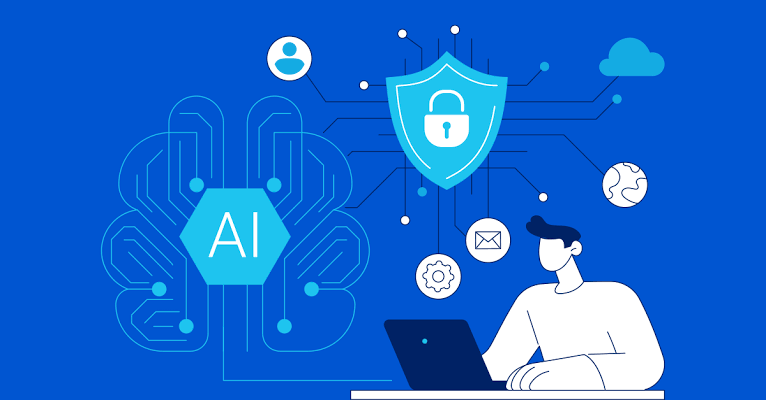
The rise of AI coding tools has dramatically accelerated software development. Platforms and assistants can now generate functional SaaS applications, dashboards, and internal tools in hours rather than weeks. While this speed delivers clear business advantages, it has also introduced a new and significant category of security risk.
In 2026, research and real-world audits consistently show that AI-generated code frequently contains exploitable vulnerabilities. Organisations that deploy these applications without rigorous independent testing are exposing themselves, their customers, and their data to unnecessary risk.
Why AI-Generated Code Is Particularly Risky
Large language models excel at producing syntactically correct, functional code. They are far less reliable at producing secure code. Multiple independent studies in 2025 and 2026 have found that roughly 45% of AI-generated code samples contain at least one security weakness from the OWASP Top 10 or equivalent categories.
Common categories of weakness include:
Missing or inadequate rate limiting and denial-of-service protections
Hardcoded secrets, API keys, encryption keys, and default credentials
Broken or missing authentication and authorisation controls
Insecure direct object references (IDOR) and access-control failures
Insufficient input validation leading to injection flaws
Misconfigured cloud and database security (particularly row-level security in common backends)
Overly permissive CORS, insecure headers, and weak session handling
These issues appear even when the AI is given detailed specifications, and they are especially prevalent in “vibe coding” or minimal-prompt greenfield applications.
Real-World Implications for SaaS Applications
When an AI-generated or heavily AI-assisted SaaS application reaches production, several scenarios become more likely:
Customer data exposure through broken access controls
Account takeover via weak authentication or session management
Resource exhaustion attacks that take the service offline
Credential leakage that enables further compromise of related systems
Supply-chain or integration risks when the application connects to other services
Because many of these applications are built and deployed quickly, traditional security review processes are often skipped or reduced. The result is a growing number of production systems that look polished but contain fundamental security gaps.
Shadow AI and SaaS Sprawl Amplify the Problem
Beyond intentionally built applications, organisations face shadow AI risk. Employees adopt AI-powered features inside existing SaaS tools or use coding assistants that interact with corporate codebases and data. Each of these integrations expands the attack surface and can introduce new pathways for data leakage or unauthorised actions.
In 2026, security teams increasingly report that AI-related features and tools are among the least governed parts of the technology estate.
Why Automated Scanners Alone Are Insufficient
Automated vulnerability scanners and basic static analysis tools catch some classes of issue, but they struggle with business-logic flaws, complex authorisation problems, and the nuanced ways AI-generated components interact. Research has shown declining confidence in fully automated AI vulnerability scanning precisely because of high false-negative rates on the types of issues that matter most.
Independent penetration testing remains the most reliable way to determine whether an AI-generated or AI-assisted application can actually be compromised by a skilled attacker.
A Practical Approach to Securing AI-Created Applications
Organisations adopting AI coding tools should implement several complementary measures:
Secure development practices — Treat AI-generated code as untrusted input. Require human review, static analysis, and secret scanning before code is merged.
Architecture and design review — Ensure fundamental access-control and tenancy models are sound before significant code is generated.
Independent penetration testing — Commission targeted application and API penetration tests after major releases or before production deployment of customer-facing SaaS.
Ongoing monitoring and retesting — AI-assisted development often leads to frequent changes. Testing should keep pace.
Cloud and backend hardening — Pay particular attention to database permissions, storage configurations, and identity services that AI tools frequently misconfigure.
How NeedSec Helps
At NeedSec we regularly test applications that contain significant volumes of AI-generated code. Our approach combines deep manual testing with an understanding of the specific failure patterns that AI tools introduce. We focus on demonstrating real exploitability and providing clear, prioritised remediation guidance that development teams can act on quickly.
Whether you have built a new SaaS product with AI assistance or are integrating AI features into existing platforms, independent penetration testing is one of the most effective ways to identify and reduce the resulting risk.
Conclusion
AI coding tools are powerful productivity amplifiers, but they do not remove the need for rigorous security assurance. In many cases they increase it. Organisations that treat AI-generated applications with the same level of scrutiny they apply to traditionally developed software — including high-quality penetration testing — will be far better positioned to protect their customers and their reputation in 2026 and beyond.
Need help with this area?
Get a quote to discuss a security assessment for your organisation.
Get a Quote